
A main characteristic of autism (formally known as autism spectrum disorder) is difficulty with social interaction. Unlike what usually comes to mind when we think of social interaction, this is not limited to large group settings — it includes interacting with family and friends as well. In fact, new research from Stanford School of Medicine shows that children with autism have a diminished brain response to their mother’s voice compared to children without autism.
So, what is so special about mom’s voice anyway?
At birth, we prefer our mothers’ voices compared to any others; they activate extra regions in the brain. In addition to activating auditory regions, mothers’ voices also activate regions associated with emotion, social function, and facial recognition. It is for this reason that mothers’ voices are the gateway to social interaction.
Autism and mom’s voice
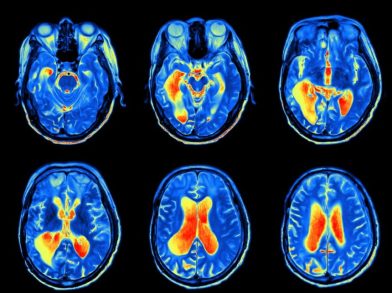
Based on new research, the brains of children with autism are not activated to the same extent when exposed to their mother’s voice when compared to children without autism. In the Stanford study, more children with autism were unable to identify their mother’s voice compared to peers. Similarly, activity in and connectivity between the regions of the brain associated with emotion, social function, and facial recognition were reduced. The degree of brain response actually varied depending on the child. Interestingly, this varying response aligned with the social communication ability of the child. (Autism is on a spectrum after all.)
So, what does this mean for autism?
One of the characteristics of autism is tuning out voices. This research suggests that people with autism tune out voices because social interaction is less captivating; their brains are not activated in the same way. Since the voices of mothers spur social function, having a diminished brain response to her voice could hinder future social interaction.
Now, researchers hope to introduce behavioral therapies and test their effectiveness by measuring brain activity in response to mom’s voice. This research could play a role in identifying ways to ease social interaction in people with autism. It is important to note that this study had a sample size of only 42 children; however, it still sheds light on a fascinating topic and paves the way for future research.

 Science On Tap